 pqaoo
pqaoo
Choosing curtains for a small living room may seem like a simple task, but I have found that the right curtains can completely change the way a room looks and feels. In a small space, every detail matters. The wrong curtain color, fabric, or length can make the room feel darker and smaller, while the right choice can make it feel open, bright, and comfortable.
When I was learning about small living room decoration, I noticed that curtains were often treated as a small finishing detail. However, they can actually become one of the most important parts of the room. Curtains control natural light, add privacy, bring color into the space, and can even make the ceiling appear higher.
If you are wondering how to choose curtains for a small living room, you do not need to make the process complicated. You mainly need to understand the size of your windows, the amount of natural light, the curtain color, fabric, length, and the overall style of your room.
In this guide, I will explain the simple things I would consider before buying curtains for a small living room.
Choose Light Colors for a Spacious Look
One of the first things I would consider is the color of the curtains. Light colors are usually a good choice for small living rooms because they help create an airy and open feeling.
White, cream, beige, light gray, soft blue, and pale green can work beautifully in a smaller space. These colors do not absorb as much visual attention as very dark shades, so the room can appear more relaxed and spacious.
If your living room already has light walls, choosing curtains in a similar shade can create a smooth appearance. The curtains blend with the walls instead of creating a strong visual break.
For example, if your walls are cream, you could choose ivory or light beige curtains. If your walls are white, soft gray or pale blue curtains can add a little personality without making the room look crowded.
This does not mean dark curtains are completely unsuitable. If you love darker colors, you can still use them. I would simply make sure that the rest of the room has enough light and that the furniture does not make the space feel too heavy.
Consider the Amount of Natural Light
Natural light is extremely important in a small living room. Before buying curtains, I would spend some time observing how sunlight enters the room during the day.
If your living room receives limited sunlight, heavy curtains may make the room feel even darker. In that situation, lightweight curtains can be a better option.
Sheer curtains are especially useful when you want to allow plenty of daylight into the room. They soften the sunlight while still keeping the space bright.
If your windows receive strong sunlight, you may want curtains that provide better light control. In this case, you can combine a light curtain with a thicker layer.
The main idea is to avoid blocking all natural light unless you really need to. A bright small living room usually feels larger and more welcoming than a dark one.
Select the Right Curtain Length
Curtain length can have a surprisingly big effect on a small living room.
For a clean and elegant appearance, I prefer curtains that reach from near the ceiling down to the floor. Long curtains can create a vertical line that makes the ceiling appear taller.
Instead of installing the curtain rod directly above the window, you can place it a little higher. This simple trick can make the window look taller and give the room a more spacious appearance.
Floor length curtains also create a more finished look. They can make a small living room feel more polished without requiring additional decoration.
However, make sure the curtains are not so long that they create a messy pile of fabric on the floor. A small amount of extra length can look soft and elegant, but too much fabric may make the area look untidy.
Hang Curtains Wider Than the Window
Another useful idea when choosing curtains for a small living room is to think about the width of the curtain rod.
If possible, install the rod wider than the actual window. This allows the curtains to sit beside the window when they are open rather than covering part of the glass.
As a result, more of the window remains visible. This can make the window appear larger and allow more natural light into the room.
It also prevents the curtains from making the window look narrow.
I think this is one of the easiest small living room curtain ideas because it does not require changing the window itself. You are simply using the curtain placement to improve the visual proportions of the room.
Pick Lightweight Fabrics
The fabric of your curtains is just as important as the color.
In a small living room, lightweight fabrics often work well because they create a softer appearance. Linen, cotton, voile, and lightweight polyester can all be good options depending on your needs.
Heavy velvet curtains can look beautiful, but they may feel visually heavy in a small room. If your living room already contains large furniture or dark colors, thick curtains could make the space feel even more enclosed.
Light fabrics allow the room to breathe visually. They also make it easier for sunlight to enter the room.
If you need privacy but still want natural light, sheer or semi sheer curtains can be especially useful.
Match Curtains With the Walls
One simple way to make a small living room look larger is to keep the curtain and wall colors close to each other.
When the curtains have a similar tone to the walls, there is less visual contrast. The eye moves more smoothly around the room.
For example, white walls can work with white, cream, or light gray curtains. Beige walls can work with cream or soft tan curtains.
You do not have to match the colors exactly. A slightly different shade can add depth while still keeping the room visually calm.
If your walls are already colorful, neutral curtains may be the easiest choice. They can balance the room instead of competing with the wall color.
Avoid Very Large Patterns
Patterns can make curtains more interesting, but large patterns may not always be ideal for a small living room.
A large floral or geometric pattern can become the main focus of the room. If the living room is already filled with decorative items, patterned curtains may make the space feel busy.
If you like patterns, I would look for small and simple designs. Thin vertical patterns can also be helpful because they draw the eye upward.
Small patterns in soft colors can add personality without overwhelming the room.
The goal is not to remove all decoration. It is simply to choose decoration that works with the limited space.
Think About Privacy
Privacy is another important factor when choosing living room curtains.
If your windows face a busy street, another building, or a neighboring house, you may need curtains that provide good coverage.
Sheer curtains are beautiful during the daytime, but they may not provide enough privacy at night when the lights inside your home are turned on.
In this situation, you could use two layers. A sheer curtain can provide soft daylight during the day, while a thicker curtain can be closed when you need more privacy.
This arrangement also gives you more control over the amount of light entering the room.
Choose Simple Curtain Hardware
Curtain rods and other hardware are small details, but they can affect the overall appearance.
For a small living room, simple curtain rods usually work better than large decorative hardware. A clean design keeps the attention on the curtains and the room itself.
You can choose hardware that matches other elements in the living room, such as furniture legs, lighting fixtures, or decorative accessories.
There is no need to make the curtain rod a major design feature. In a small room, simple details often create a cleaner result.
Consider Your Furniture
Before choosing curtains, look at the furniture already present in your living room.
If you have a large sofa, a coffee table, shelves, and several decorative pieces, you may want to keep the curtains simple.
If your furniture is mostly neutral, you can use curtains to introduce a soft accent color.
For example, a living room with a beige sofa and white walls could look attractive with soft sage green or light blue curtains.
I would avoid choosing curtains without considering the rest of the room. Even beautiful curtains can look out of place if their color or style does not work with the furniture.
Use Curtains to Make the Ceiling Look Higher
If your small living room has a low ceiling, curtains can help create the appearance of more height.
The easiest method is to hang the curtain rod closer to the ceiling rather than directly above the window.
Then use long curtains that extend all the way to the floor.
This creates a strong vertical effect. The eye naturally follows the curtains from top to bottom, which can make the room feel taller.
This is especially useful in apartments and smaller homes where ceiling height is limited.
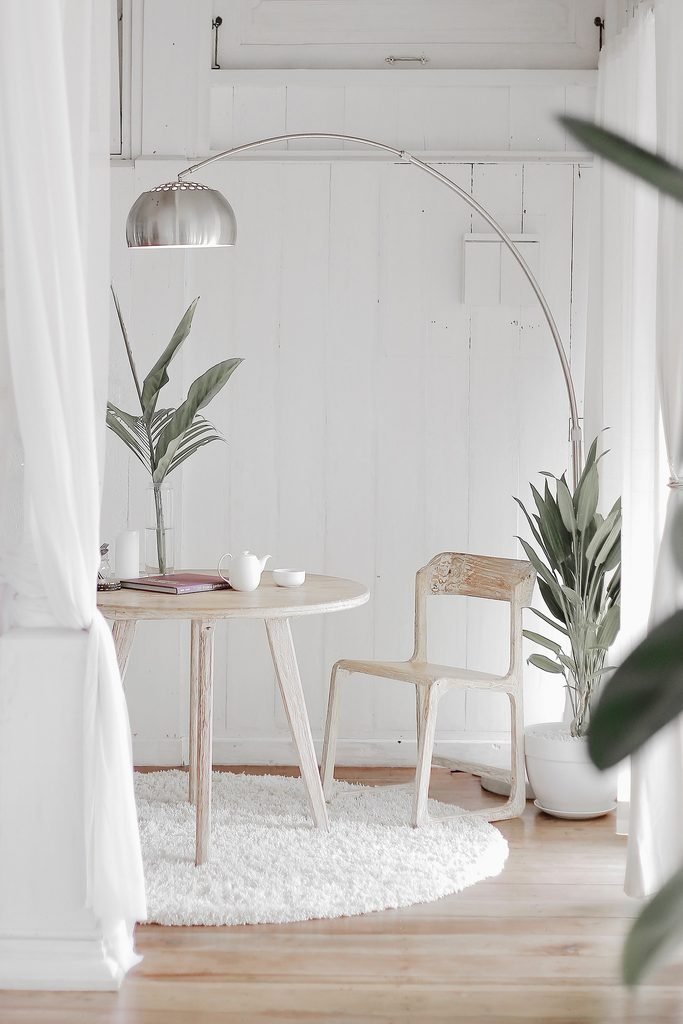
Avoid Curtains That Are Too Heavy
Heavy curtains can provide excellent insulation and privacy, but they are not always the best choice for a small living room.
If the fabric is very thick and dark, it can visually reduce the size of the window. It may also block a lot of natural light.
If you need heavier curtains for practical reasons, consider choosing a lighter color. Cream, light gray, beige, and other soft shades can reduce the heavy visual effect.
You can also combine a simple blackout curtain with a lighter inner layer if you need both darkness and a bright daytime appearance.
Consider Blackout Curtains Carefully
Blackout curtains can be useful if your living room receives strong sunlight or if you use the space for watching television.
However, complete blackout curtains may not be necessary for every small living room.
If your main goal is to make the space feel bright and spacious, curtains that allow some natural light may be better.
If you decide to use blackout curtains, look for designs with a simple appearance and lighter outer colors.
The most important thing is to choose curtains based on how you actually use the room rather than buying them only because they are popular.
Use One Curtain Color Throughout the Room
If your living room connects directly to another small area, using the same curtain color can create visual continuity.
For example, if your living room and dining area share the same space, matching curtains can make the entire area feel more organized.
Different curtain colors in a small open plan space can divide the room visually and make it appear more complicated.
A consistent color palette usually works better when you want a calm and spacious appearance.
Choose Curtains Based on Your Lifestyle
Beautiful curtains are important, but practical use matters too.
If you have children or pets, you may prefer curtains that are easy to wash and maintain.
If the room receives a lot of dust, washable fabrics can make cleaning easier.
If you rarely open and close the curtains, you can focus more on appearance. If you adjust them several times a day, choose a fabric and curtain system that is easy to operate.
I have found that the best home decoration choices are usually the ones that look good and fit naturally into everyday life.
Think About Curtain Width
Curtain width is another detail that should not be ignored.
Curtains need enough fabric to create soft folds when they are closed. If the curtains are too narrow, they can look stretched and inexpensive.
At the same time, you do not need an excessive amount of fabric in a small room.
Measure the window carefully before purchasing curtains. Check the curtain packaging or product information to understand how much coverage one panel provides.
Proper width will help the curtains hang naturally and give the window a more finished appearance.
Keep the Overall Style Simple
When learning how to choose curtains for a small living room, I think the most important lesson is to avoid making the design too complicated.
A small room does not need dozens of decorative details.
Simple curtains in a suitable color, combined with good placement and enough natural light, can create a beautiful result.
If your living room has a modern design, simple solid curtains may work best.
For a traditional room, subtle patterns or textured fabrics can add warmth.
For a relaxed style, linen or cotton curtains can create a comfortable atmosphere.
The curtains should support the style of the room rather than fight against it.
Common Mistakes to Avoid
There are several common curtain mistakes that can make a small living room feel smaller.
One mistake is choosing curtains that are much darker than everything else in the room. Dark curtains can work, but they need to be balanced carefully.
Another mistake is hanging the curtain rod too low. Placing it directly above the window can make the ceiling look shorter.
Using curtains that are too short can also make the room look unfinished.
Another issue is selecting very busy patterns when the room already has many decorative elements.
Finally, avoid blocking natural light unnecessarily. A small room benefits greatly from sunlight.
Final Thoughts
Learning how to choose curtains for a small living room becomes much easier when you focus on a few important details. Start by looking at the amount of natural light in your room. Then consider the curtain color, fabric, length, width, and placement.
In most small living rooms, light colors and lightweight fabrics can create a bright and comfortable atmosphere. Hanging curtains higher and wider than the window can make the window look larger and the ceiling appear taller.
You should also think about privacy, cleaning, furniture, and your personal decorating style before making a final decision.
For me, the best curtains are not necessarily the most expensive ones. They are the curtains that make the room feel comfortable, bright, balanced, and easy to live in.
A small living room can still look beautiful with the right decoration. With carefully chosen curtains, even a limited space can feel more open, warm, and welcoming.